



Inside DOXRA
A glimpse into the platform used to transform legacy systems into structured organizational knowledge.
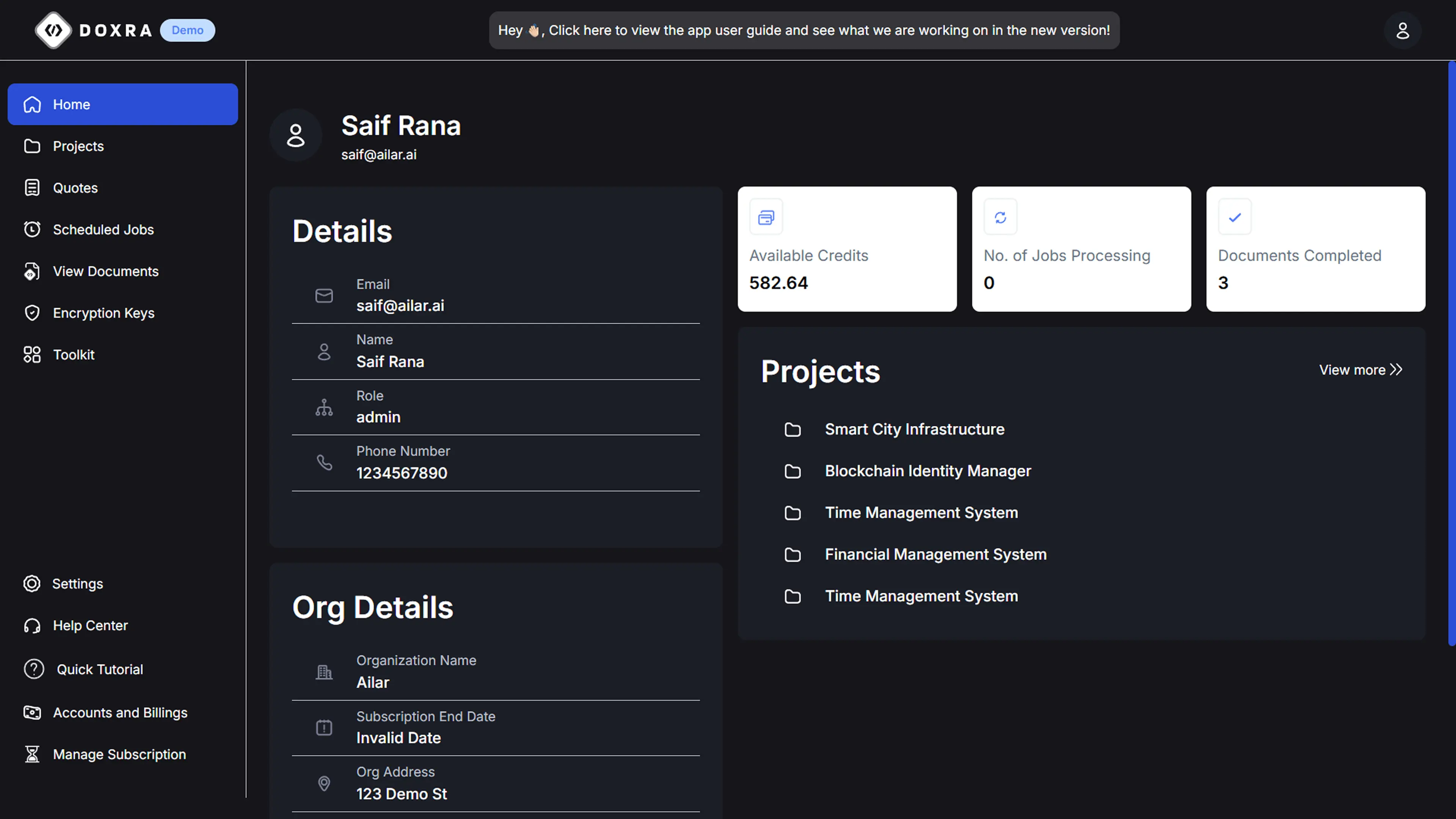
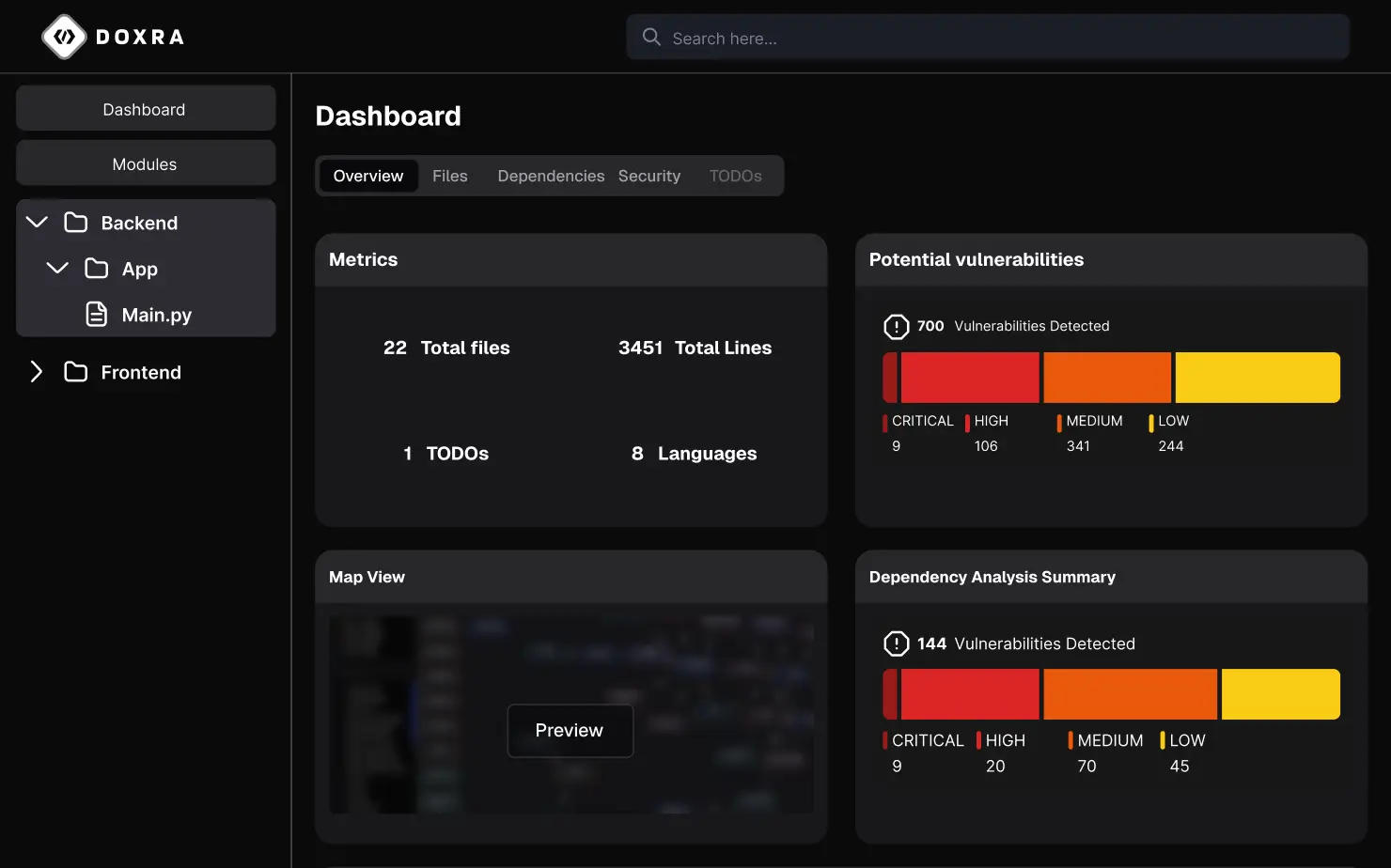
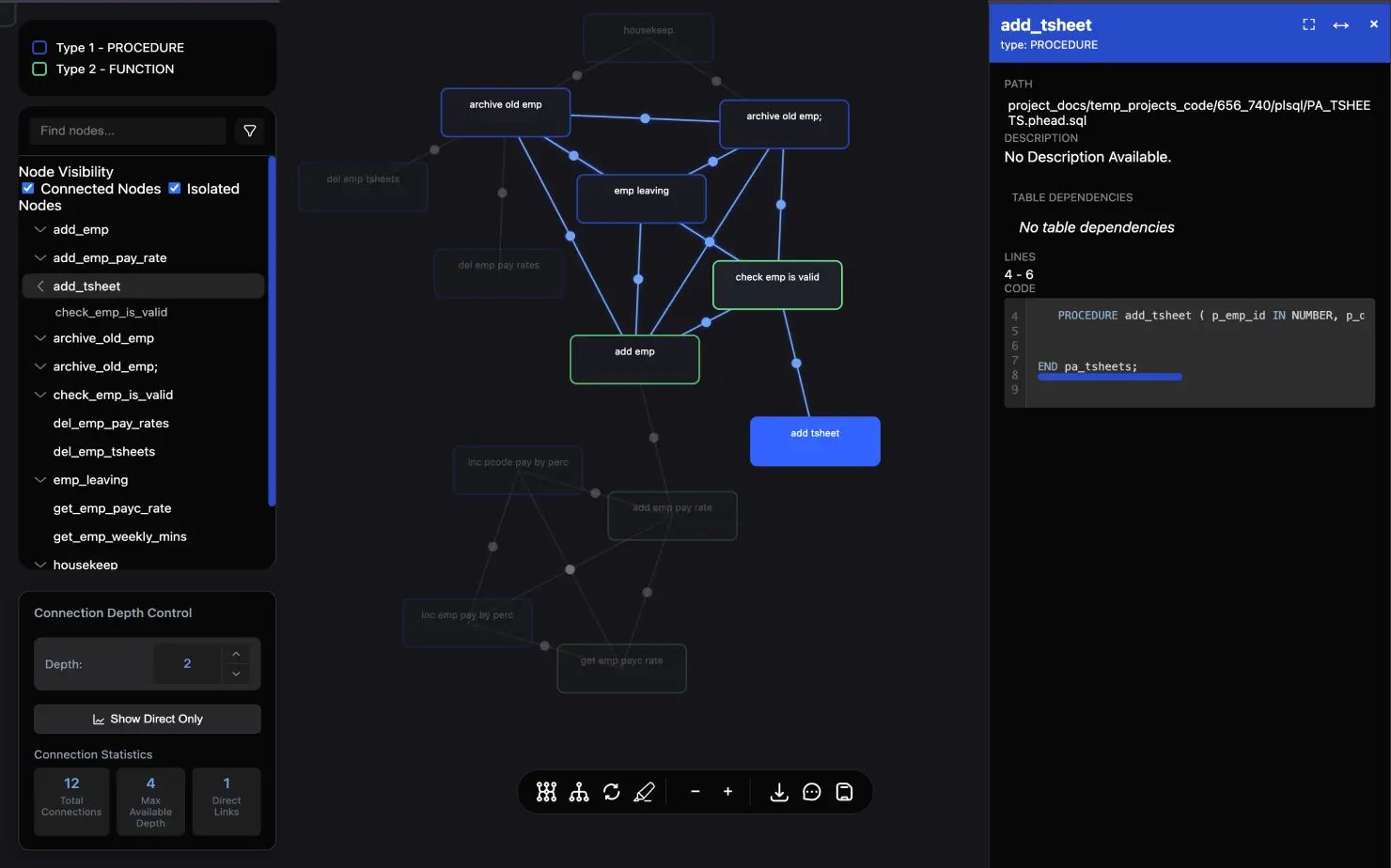
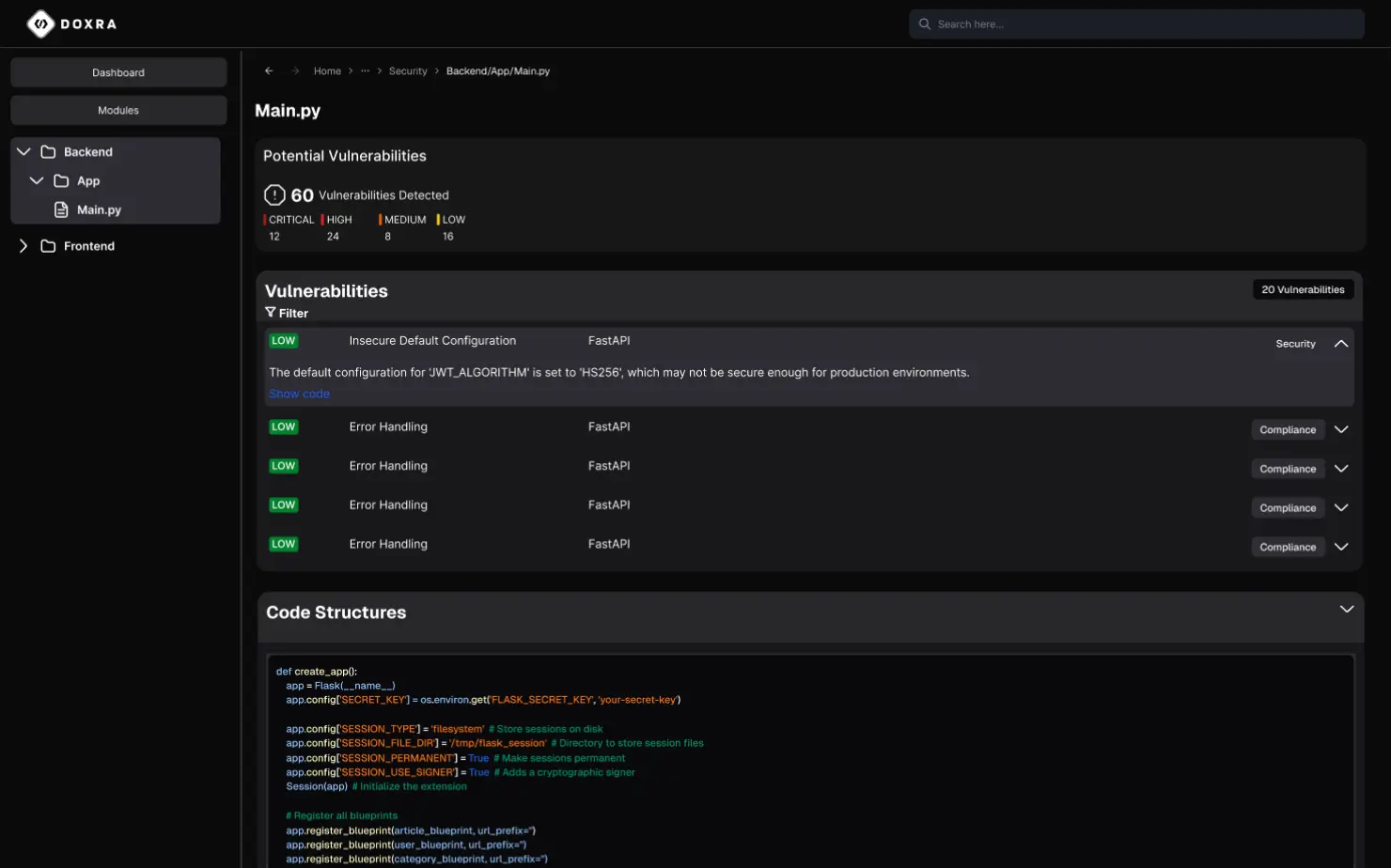
The Challenge
Many large enterprises rely on software systems that have evolved over decades. While these systems continue to power critical operations, they suffer from a common, costly problem: the knowledge required to maintain them exists only in the minds of a few experienced engineers.
Documentation is either outdated, inconsistent, fragmented across departments, or completely missing. For organizations in banking, finance, and enterprise technology, this creates serious operational risk.
Slow Onboarding
New hires require months to understand existing systems due to undocumented codebases
6-Month Cycles
Modernization projects required assembling expert teams spending months analyzing codebases manually
Inconsistent Output
Every consultant documented systems differently, delivering inconsistent quality at high cost
Knowledge Risk
Critical institutional knowledge disappears when senior engineers leave the organization
Stakeholder Misalignment
Business stakeholders struggle to understand technical dependencies, blocking strategic decisions
Enterprise Trust Gap
Organizations needed a solution that felt secure, reliable, and built for enterprise-grade expectations
From Documentation Project to Knowledge Platform
DOXRA replaced a slow, expensive, and inconsistent consulting process with an automated, repeatable knowledge workflow.
- Team of consultants
- Manual analysis
- Multiple workshops
- Months of effort
- Static documents
- Difficult onboarding
- Automated code analysis
- AI-powered documentation
- Interactive exploration
- Less than one week
- Multi-level knowledge system
- Faster onboarding
The Opportunity
Instead of treating documentation as a manual consulting exercise, we saw an opportunity to transform it into a scalable, AI-powered workflow.
The vision behind DOXRA was straightforward: allow organizations to upload a legacy codebase and receive structured, searchable, multi-level documentation understandable by both engineers and business stakeholders.
Rather than producing static documents, the platform would generate an interactive knowledge system that organizations could explore, navigate, and maintain over time. The goal was not just to document code — it was to make organizational knowledge accessible.
Upload-to-Documentation
Reduce requirement gathering to a single codebase upload — no consultants, no lengthy discovery
Scalable Knowledge
Generate documentation at enterprise scale without proportional increases in time or cost
Living Documentation
An interactive knowledge system — searchable, explorable, and maintainable — not a static PDF
Cross-Stakeholder Clarity
Bridge the gap between technical teams and business leadership through layered documentation
How DOXRA Works
Rather than generating static reports, DOXRA transforms source code into a navigable knowledge ecosystem that supports both technical and business stakeholders.
The platform ingests any legacy codebase — regardless of age, language, or size — and runs it through a multi-stage pipeline designed to extract, analyze, and structure organizational knowledge.
Each stage is designed to handle enterprise-scale codebases: chunked processing preserves cross-file context, dependency mapping reveals hidden relationships, and three-layer output generation ensures every stakeholder receives the right abstraction level.
The result is not a document. It is a navigable knowledge system — explorable online or fully offline through the proprietary .doxra viewer.
My Contribution
I co-founded the product, defined its vision, and owned design and frontend from day one.
Co-Founder & Product Strategy
Defined the product vision, workflows, and roadmap from zero — not handed a brief, but writing it
UX Architecture
Designed all UX flows, the enterprise portal, document viewer, and the complete brand identity
Frontend Lead
Built V1 in Flask/Jinja2, rebuilt in React + Tailwind, and delivered all production frontend components
AI Workflow Design
Designed the interaction layer between AI outputs and the user experience — translating raw AI results into trusted, navigable knowledge
Product Roadmap
Drove roadmap decisions with analytics, leading the V2 redesign informed by real enterprise usage data
Offline & Security UX
Designed secure offline documentation workflows for enterprises operating in air-gapped environments
Understanding Enterprise Documentation
Through interviews with more than 50 technical leaders — developers, architects, and CTOs — the team identified recurring patterns that shaped every design decision.
Designing for Trust
One of the biggest challenges was not generating documentation. It was helping enterprises trust the output.
During early testing, organizations raised concerns around security, AI hallucinations, data privacy, and knowledge completeness. To address these concerns, the platform was designed around enterprise trust principles.
Organizations run the system entirely within their own infrastructure. Code never leaves their environment.
Generated documentation is exported and explored without internet connectivity — essential for regulated industries.
A custom file format for secure, encrypted offline documentation that only the DOXRA viewer can open.
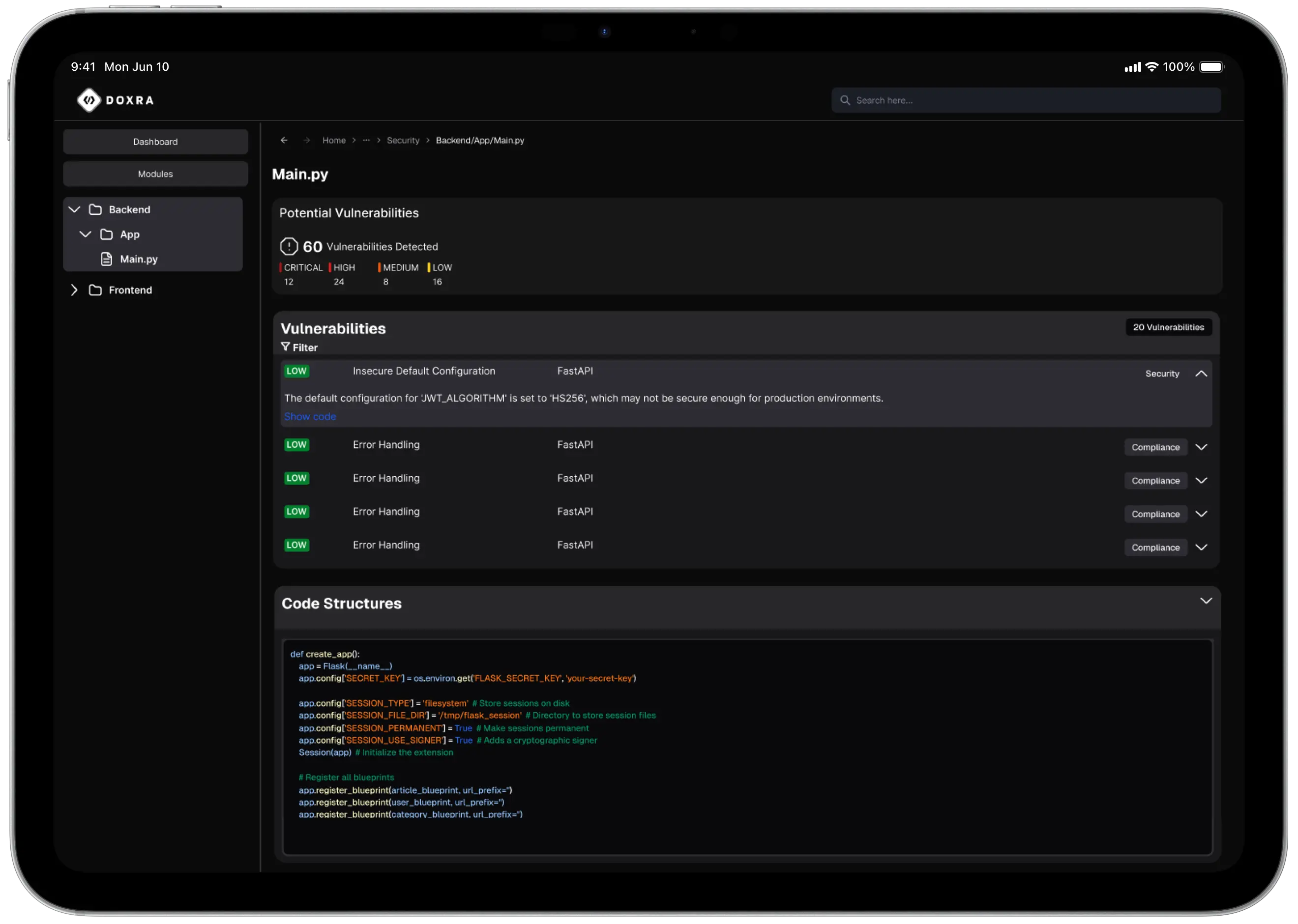
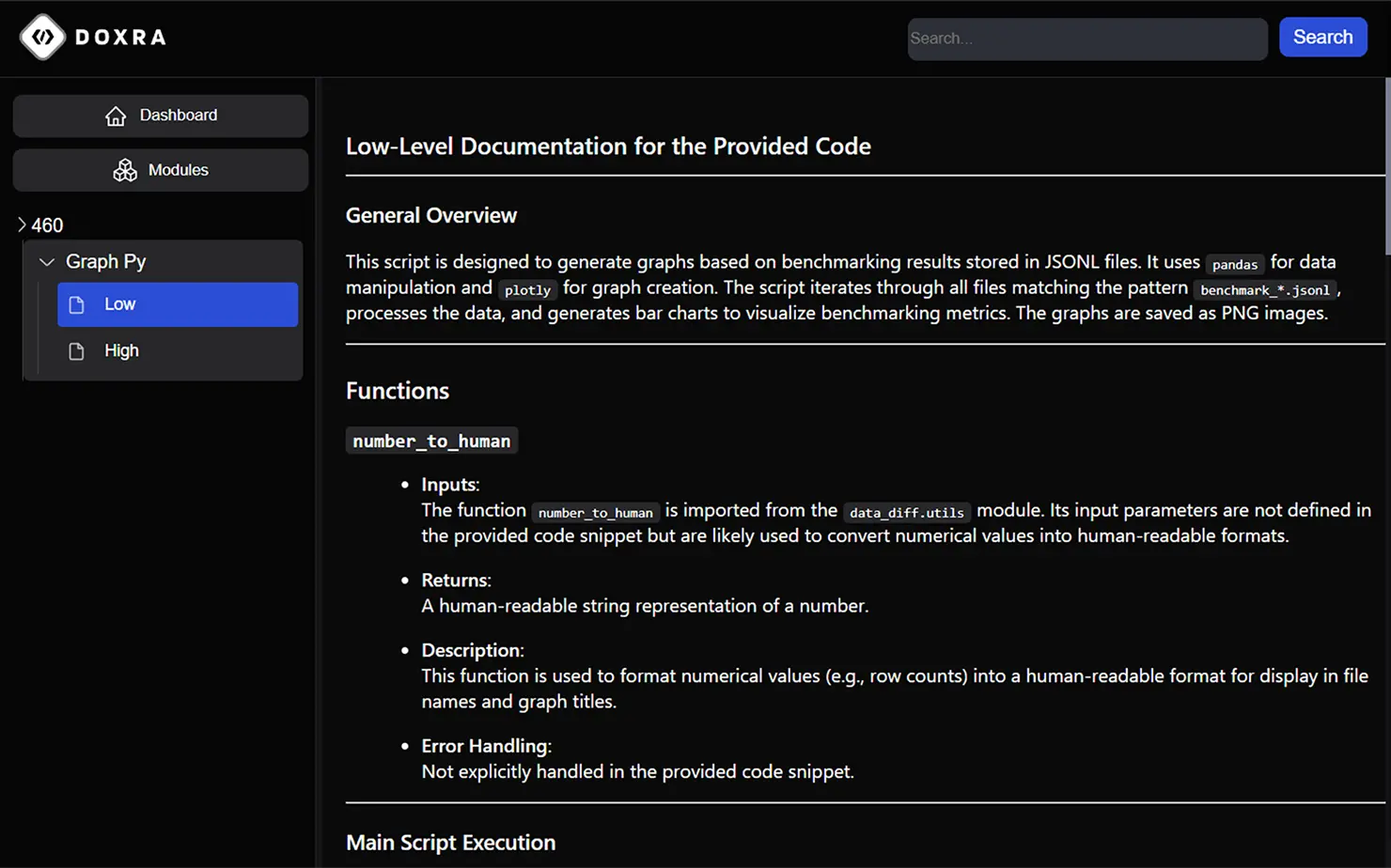
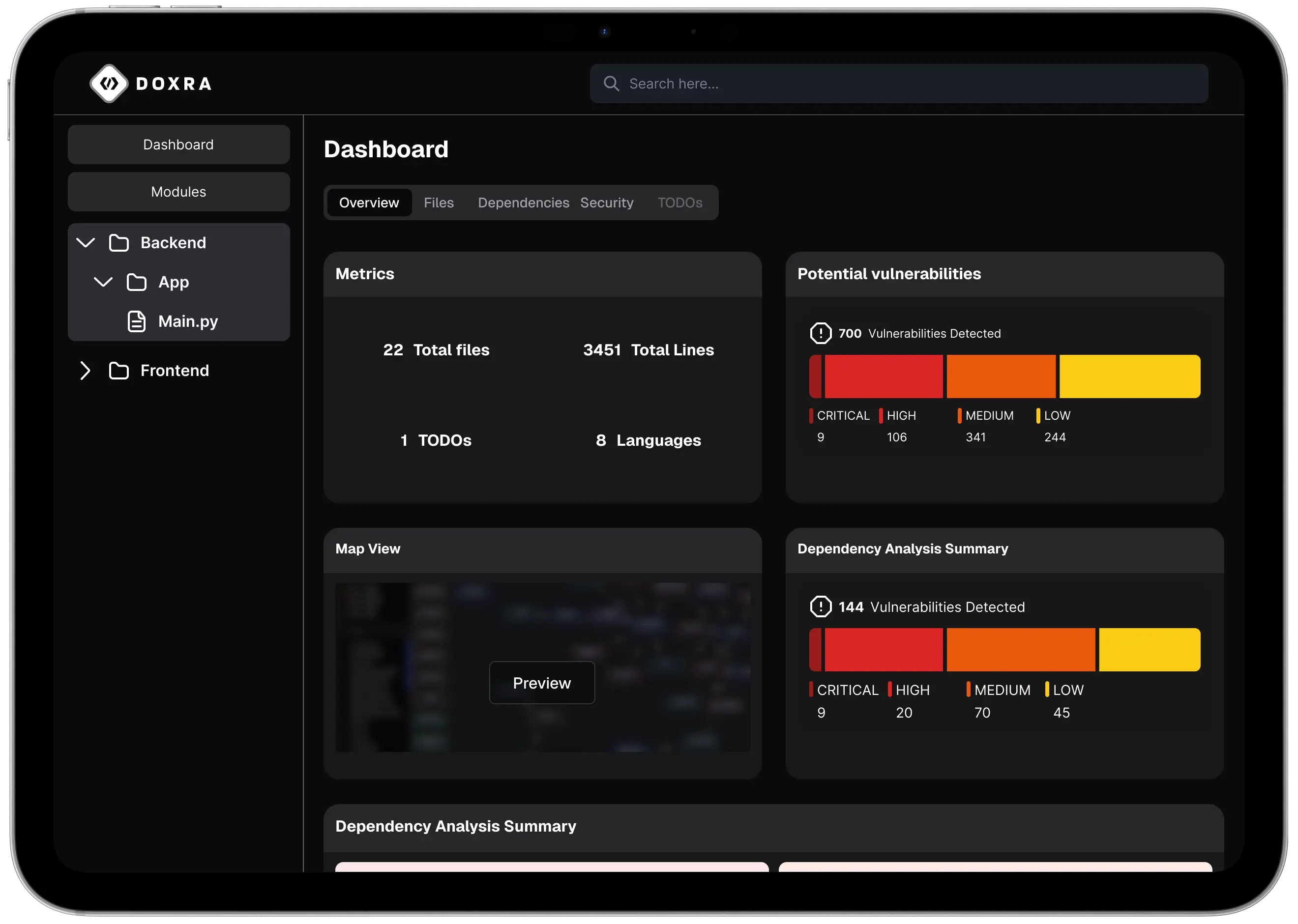
Instead of generating only developer-focused outputs, documentation was organized into three distinct layers, ensuring every stakeholder group could access information at the right level of abstraction.
Product Workflow
The user journey was designed to eliminate friction at every step — from first contact to knowledge-sharing across departments.
Solving Complex UX Problems
This is where design credibility is earned. Five distinct UX challenges required original solutions — not patterns borrowed from SaaS templates.
Building Enterprise-Scale Offline Diagrams
One of the most technically demanding challenges of the project — and one of the most revealing about what enterprise customers actually need.
One enterprise client requested the ability to explore system architecture entirely offline for security reasons. While visualizing small systems was straightforward, rendering large codebases and database relationships locally introduced major performance challenges.
The solution required multiple iterations, rendering optimizations, data restructuring strategies, and frontend performance improvements. Lazy loading of nodes, virtualized diagram layers, and canvas-based rendering were all explored and refined through successive sprints.
After nearly two months of experimentation, we delivered an offline diagram viewer capable of handling enterprise-scale system relationships while maintaining usability and responsiveness — a capability that became one of the platform's most differentiating features.
Building Around AI Limitations
Generating text is easy. Generating reliable organizational knowledge at enterprise scale is a different problem entirely.
The challenge was not generating text. The challenge was generating reliable organizational knowledge at enterprise scale — consistently, accurately, and across codebases with hundreds of thousands of lines.
Frontend Engineering
Design without delivery is just theory. Every interface was designed and built — not handed off.
The technology stack evolved from Flask/Jinja2 in V1 (to reach market quickly) to React + Tailwind in V2 — enabling a modular component library and long-term maintainability.
What Was Built
Performance Improvements
Learning Through Version 1
Every V1 product teaches you what you could not have known before building it. DOXRA was no different.
Results
DOXRA is live as Version 1, with measurable outcomes across enterprise pilots. The product has been endorsed by CTOs and stakeholders from billion-dollar companies and is gaining traction in regulated industries.
Enterprise Endorsements
Endorsed by CTOs and stakeholders from billion-dollar companies across banking and enterprise software
Regulated Industry Traction
Adoption within regulated industries where security, compliance, and audit trails are non-negotiable
V2 Underway
Analytics and enterprise feedback directly driving the Version 2 redesign — more features, improved flows, deeper AI integration
Stakeholder Alignment
One platform now serves executives, solution architects, and developers simultaneously — eliminating the translation gap
What We Learned
Documentation is not a code problem. It is a knowledge accessibility problem.
Organizations rarely struggle because information is missing. They struggle because information is fragmented across systems, teams, and individual expertise — locked inside codebases that only a handful of people fully understand.
DOXRA demonstrated how AI, information architecture, and enterprise-focused design can transform documentation from a static deliverable into a living knowledge system. That shift created value far beyond documentation itself.
It accelerated onboarding, improved stakeholder alignment, and reduced the risks associated with legacy system modernization — without requiring a team of consultants, months of discovery, or a single workshop.
The product taught me that great enterprise design is not about making things look professional. It is about making complex systems feel legible — to every person in an organization, regardless of their technical depth.
